Road Rehabilitation: Frequently Asked Questions and Process Overview
Infrastructure construction, particularly road rehabilitation works, often raises many questions.
This process is not limited merely to renewing an existing road; it involves multi-stage, closely interconnected operations that begin with planning and conclude with the operational phase.
Each stage is based on technical standards and construction norms, ensuring road quality, safety, and long-term durability. It is especially important to consider factors such as seasonality, climatic conditions, working methods, and the proper organization of processes. In this blog, we have compiled frequently asked questions and provided clear answers to help you better understand these processes.
1. Which season is optimal for road rehabilitation works?
Summer is considered the most optimal period for road rehabilitation, as climatic conditions during this time facilitate efficient and high-quality execution. In certain cases, the spring and autumn seasons are also acceptable, while winter is regarded as the most passive period.
2. How is traffic organized during road rehabilitation?
During the rehabilitation period, great importance is placed on the mobility process to avoid transportation issues as much as possible. To achieve this, a traffic management scheme is developed and coordinated with the Patrol Police before the commencement of works, after which the rehabilitation process begins.
3. Is it possible to partially use the road while works are in progress?
In most cases, partial use of the road is possible. Typically, project plans are designed to ensure the continuity of traffic flow. For this purpose, temporary traffic schemes are implemented to maintain mobility with minimal disruption.
4. How is the old road decommissioned and what stages does it involve?
The removal of an old road can take various forms. For example, it includes the milling of the old asphalt pavement as well as earthworks, which involve the excavation of existing soil/ground.
5. What methods ensure road durability and long-term service life?
Road durability and long-term operation depend on the quality of materials, traffic intensity, and geological conditions. We carry out design based on geological surveys, which inform the structural plan. Additionally, specialized calculations are performed to determine the expected load on the road, ensuring its stability and longevity.
6. How soon can a newly paved road be used at full capacity?
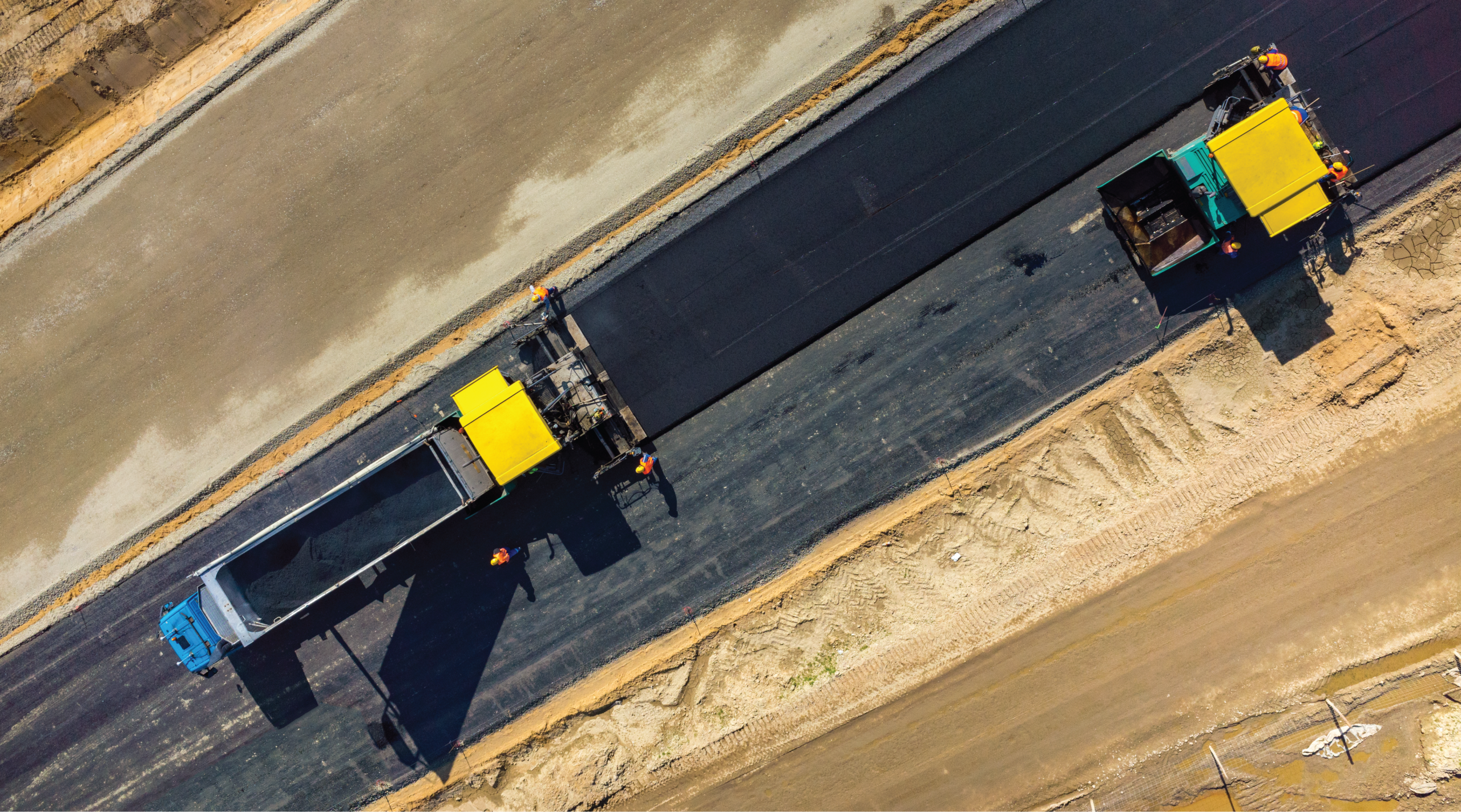
Traffic at full capacity can generally be allowed on newly laid asphalt pavement approximately 24 to 48 hours after installation. This time interval depends on environmental conditions, including air temperature and seasonal factors.
7. On average, how long does a new road surface maintain its quality and durability?
A road pavement consists of base (lower) layers and wearing (upper) courses. The service life of these layers typically ranges between 7 to 15 years, determined by the road category and the intensity of transport loads.
In conclusion, road rehabilitation is a multi-stage and highly responsible process where every detail impacts the quality of the final result. Proper planning, the selection of the appropriate season, and the use of modern technologies determine a road’s durability and safety.
Tesen Group implements each project based on these very principles—focusing on quality, efficiency, and long-term results.